In 2026, protecting your Florida home from a Category 5 hurricane shouldn’t have to mean draining your life savings. While the high-end market often focuses on expensive motorized systems and custom impact glass, the reality is that affordable hurricane protection is more accessible than ever for the average homeowner.
This guide breaks down the most cost-effective ways to harden your home, comparing everything from budget-friendly panels to the hidden financial assistance programs that can cover a significant portion—or even all—of your costs. At Storm Shield, our goal is to ensure that every Floridian can find a safety solution that fits their budget without compromising on quality or code compliance.
Top Options for Affordable Hurricane Protection in 2026
When searching for affordable hurricane protection, you are essentially looking for the highest wind-rating at the lowest price per square foot. In the 2026 market, three specific solutions stand out for their ability to meet the strict Florida Building Code (FBC) without the “luxury” price tag.
1. Aluminum Storm Panels (The Budget King)
If your primary goal is the absolute lowest upfront cost, aluminum storm panels remain the undisputed champion. These corrugated metal sheets are lightweight, incredibly strong, and completely removable.
- The Cost: In 2026, aluminum panels typically cost between $10 and $18 per square foot installed. For a standard 3-bedroom home, this often translates to a total project cost of $3,000 to $7,000.
- The Technical Edge: These panels are designed with a corrugated “rib” structure that provides immense structural rigidity. Despite being thin, they can withstand the impact of flying debris and the extreme pressure cycles of a major storm.
- The Catch: The affordability comes at a price of labor. These panels require you to physically install them before every storm using tracks and wing nuts. You must be comfortable climbing ladders and handling metal sheets, or have a plan to hire a shutter service, which can cost $250–$500 per deployment.
2. Hurricane Fabric and Screens
Often overlooked, high-tenacity hurricane fabric is a rapidly growing segment of affordable hurricane protection. These reinforced, PVC-coated or aramid fiber meshes are designed to deflect flying debris and “catch” impact like a trampoline.
- Cost and Ease: Priced similarly to aluminum panels (around $10–$18 per square foot), they offer a massive advantage in weight. They are up to 90% lighter than metal, making them the most accessible option for seniors or single homeowners who want to handle their own storm prep.
- Storage: Unlike metal panels that take up significant garage space, an entire house’s worth of hurricane fabric can often fit into two or three large duffel bags.
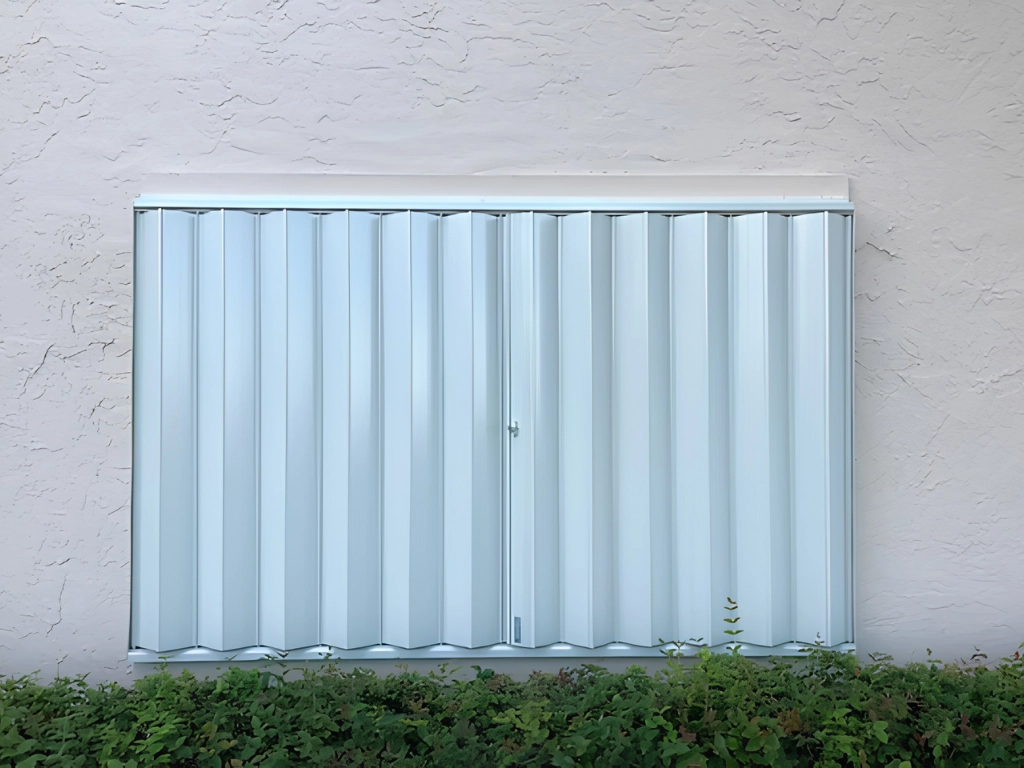
3. Accordion Shutters (The Value Choice)
While slightly more expensive upfront, affordable hurricane protection often points to accordion shutters because they are a permanent investment. They sit on the side of your window year-round, meaning they are always ready.
- Pricing: You can expect to pay between $15 and $25 per square foot in 2026.
- Long-Term ROI: Because they take only minutes to close, they eliminate the recurring cost of hiring help during a “Hurricane Warning.” Over a five-year period, the labor savings often make accordions cheaper than removable panels. You can see our latest accordion designs here.
Financial Assistance and Grants: How to Get Protection for Free
In 2026, the cost of affordable hurricane protection is being offset by the largest state-funded safety initiative in Florida’s history. The My Safe Florida Home (MSFH) program has become a lifeline for homeowners, offering a path to high-quality shutters with little to no out-of-pocket expense.
The 2026 Grant Breakdown
The Florida Legislature has committed over $350 million for the 2025–2026 cycle to help residents “harden” their homes against wind damage. Depending on your income and age, you could qualify for one of two major funding tiers:
- Low-Income Grants (No Match Required): Qualifying low-income households (earning ≤80% of their county’s median income) can receive up to $10,000 in grant money with no matching funds required. For many homes, this is enough to cover the entire cost of affordable hurricane protection like aluminum panels or accordion shutters.
- Standard Matching Grants (2-to-1 Match): For most other homeowners, the state offers a powerful incentive: for every $1 you spend, the state provides $2, up to a maximum of $10,000. To maximize this grant, you would contribute $5,000 toward a $15,000 project, with the state covering the remaining $10,000.
- Free Inspections: Any owner-occupied, single-family home can apply for a free wind mitigation inspection. This professional report identifies exactly where your home is vulnerable and is the first step toward unlocking grant funds.
Pro Tip: Funding for 2026 is distributed in “priority tiers.” Seniors (60+) and low-income households are typically first in line. You can check the current status of applications and your eligibility tier at the official portal: mysafeflhome.com.
The Hidden ROI of “Affordable” Shutters
The true cost of affordable hurricane protection is actually much lower than the price tag suggests when you factor in what we call the “Triple ROI.” Between insurance credits and long-term home health, these systems often pay for themselves in under five years.
1. Mandatory Insurance Premium Reductions
Florida Statute 627.0629 legally requires every property insurance company in the state to offer discounts for verified wind-mitigation features. By installing code-approved affordable hurricane protection on every opening (including your garage and front door), you reach “Level A” protection.
- The Discount: This typically results in a 30% to 45% reduction in the wind portion of your premium.
- Annual Impact: For a standard Florida policy with a $3,500 wind premium, this saves you roughly $1,050 to $1,575 every year. Over a decade, that’s over $10,000 back in your pocket—often more than the original cost of the shutters.
2. Preventing “Secondary” Water Damage
It isn’t just the flying debris that destroys homes; it’s the rain that follows. Even if your windows don’t shatter, high-velocity winds can force water through standard window seals and door sweeps. Affordable hurricane protection acts as a primary shield, keeping the “wet” on the outside and preventing thousands of dollars in potential drywall, mold, and flooring repairs.
3. Increased Resale Value
In 2026, savvy Florida homebuyers are looking for “hardened” homes. A property that already features a permanent, code-compliant shutter system is a major selling point that can increase your home’s valuation by 2% to 4%, as buyers recognize they won’t have to tackle the installation cost themselves.
2026 Protection Tier Comparison
| Protection Type | Cost Per Sq. Ft. | 10-Year Total Value | Deployment Effort |
| Aluminum Storm Panels | $10 – $18 | High (Great Credits) | High (Heavy) |
| Hurricane Fabric/Screens | $12 – $20 | High | Moderate (Lightweight) |
| Accordion Shutters | $15 – $30 | Highest (Daily Value) | Low (Fast) |
| Plywood (Standard) | $3 – $7 | Very Low | Extreme (Unsafe) |
Frequently Asked Questions (FAQs)
As homeowners navigate the complexities of affordable hurricane protection in 2026, several questions frequently arise regarding “last-resort” methods versus professional systems.
Is plywood a good form of affordable hurricane protection?
While plywood is often seen as the “cheapest” option, it is rarely the most affordable hurricane protection in the long run. Under the 2026 Florida Building Code, plywood must be a minimum of 7/16-inch thick (though 5/8-inch is recommended) and must be anchored directly into the wall’s structural framing—not the window trim.
- The Financial Downside: Plywood earns zero insurance credits. Because it is not a “Florida Product Approved” engineered system, insurers do not recognize it as valid opening protection.
- The Deterioration: Plywood rots, warps, and splinters after just one or two seasons of storage. When you factor in the cost of replacement wood and the lack of insurance savings, a one-time investment in aluminum panels usually pays for itself within three years.
Can I mix and match shutter types to save money?
Absolutely! This is one of the best strategies for achieving affordable hurricane protection for your entire home. Many Storm Shield clients use a “hybrid” approach:
- Accordions for large sliding glass doors and first-floor entries (where ease of use is vital).
- Aluminum Panels for smaller, less accessible windows or second-story openings that are rarely seen.
- Hurricane Fabric for large, covered lanais or front porches.This strategy allows you to put your budget where it matters most while still securing 100% of your openings to qualify for those massive insurance discounts.
How do I find a contractor for affordable shutters?
When shopping for affordable hurricane protection, always ensure your contractor is state-licensed and provides a Miami-Dade NOA (Notice of Acceptance) or a Florida Product Approval number for every product. Without these documents, you cannot claim your insurance credits or qualify for the My Safe Florida Home grant. You can request a transparent, itemized quote from our team at Storm Shield to see exactly how these options fit your 2026 budget.
Conclusion: Protecting Your Home on a Budget
True affordable hurricane protection is about finding the point where safety meets financial common sense. In 2026, the combination of budget-friendly aluminum panels, lightweight fabric, and the robust My Safe Florida Home grant program means that no Florida resident should have to leave their home vulnerable.
By shifting your perspective from “what is the cheapest upfront” to “what provides the best long-term ROI,” you can protect your family and your finances simultaneously. Don’t let the fear of a high price tag keep you from securing your property. Start with a free wind mitigation inspection, explore the grant tiers, and choose the permanent, code-compliant system that works for you.
Ready to see your options? View our affordable shutter gallery or request a free estimate to see how much you can save on your 2026 insurance premiums.